Listen to this article.
The competing model, the synagogue.
The Family Model of the Church had a competing, organisational model, the synagogue.
By adopting the synagogue model, the early church gave Satan a limited victory; opening the door to internal conflict and division that would cause church growth to grind to a crawl.
By the end of the first century, the Family Model was as dead as a Dodo.
And two thousand years later, there are still people-groups that have never heard the Gospel.
A brief history of the synagogue model.
Let’s be clear, the synagogue was a human construct; not an instruction from God.
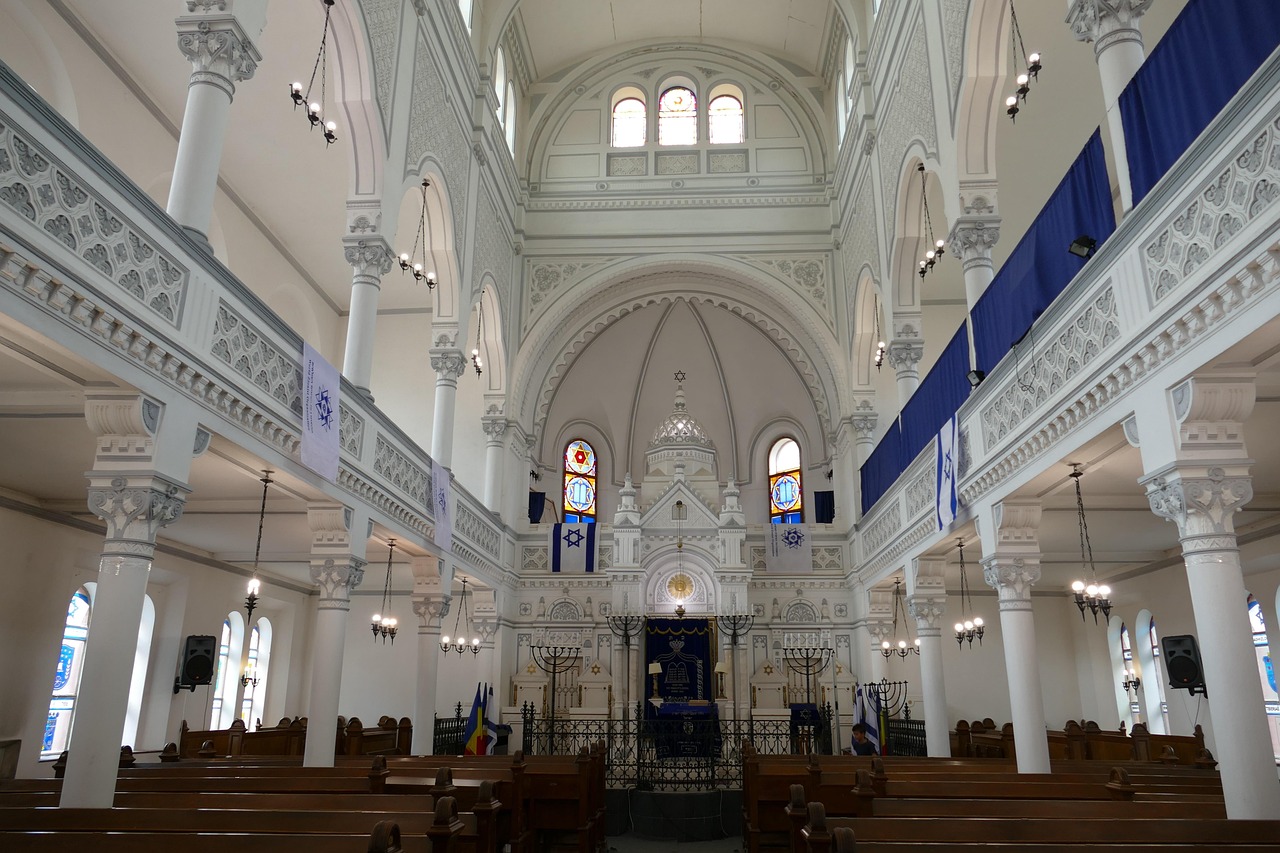
The word, synagogue, is a Greek derivation of the Hebrew term ‘Beit Knesset’ (בית כנסת), or ‘house of gathering’.
Sometime in the third century BC, the synagogue, emerged as the place where Jews in the diaspora who, being far from the temple in Jerusalem, could gather for ‘communal prayer and study of the scriptures’; the scriptures to the Jews of the diaspora being both the Hebrew Bible (Tanach), and the oral law (Talmud).
A synagogue was formed when a community could raise a minyan; an assembly consisting of ‘at least ten adult, male, believing Jews in one location’.
After the destruction of the second temple in 70AD, the synagogue became the central focus of Jewish religious life. And, after 70AD, its format also evolved from ‘communal prayer and study' to rabbinical teaching from a pulpit.
This transition is illustrated with a simple comparison between the Berean Jews response to Paul’s preaching and the Yiddish term for the synagogue.
To the Bereans, the synagogue was a gathering place for ‘communal prayer and study’;
Now these Jews were more noble than those in Thessalonica; they received the word with all eagerness, examining the Scriptures daily to see if these things were so.
(Acts 17:11)
The Yiddish term for synagogue conveys the idea of a 'place to be taught by someone more learned'.
In Yiddish the synagogue is called a ‘shul’, which is related to the German word for school (schule); shul being the most commonly used term for synagogue today, as in ‘I am going to shul’.
Disciples in the early churches were predominantly Jews, so it isn’t surprising that, having been deprived of the Family Model, the Apostles, especially Paul, would naturally gravitate towards a familiar organisational model, the synagogue.
The Christian churches would then follow a similar evolution from a place ‘communal study, prayer and fellowship’ in the early 'house churches', to a pulpit-based, teaching model.
In the early, post-apostolic period, a two-tier, clergy/laity system emerged, in which bishops such as Polycarp, Ignatius and Clement, began to assume greater authority over the disciples in their cities; a professional priesthood in the making.
Jesus Christ and the Synagogue.
By New Testament times, the Pharisees, a separatist sect in Judaism, dominated the synagogues; exercising supreme influence throughout Judea and Galilee as well as the diaspora; demanding compliance with the strictest codes of the oral law, the Talmud, in which oral regulations were often at odds with the Spirit of the written Law of Moses, the Torah.
When Jesus began teaching in the synagogues, his preaching and practices, put him at odds with the Pharisees and it wasn’t long before he was ejected from the synagogues and began itinerant, open-air preaching.
The Pharisees went out and conspired against him, how to destroy him.
(Matthew 12:14)
They took offence at him but Jesus said, “A prophet is not without honour except in his hometown and in his own household.”
(Matthew 13:57)
When they heard these things, all in the synagogue were filled with wrath. They rose up and drove him out of the town and brought him to the brow of the hill on which their town was built, so that they could throw him down the cliff. But passing through their midst, he went away.
(Luke 4:28-30)
They were filled with fury and discussed with one another what they might do to Jesus.
(Luke 6:11)
Jesus Christ, the Word of God (John 1:1-14), had no regard for the oral law and consistently ignored its burdensome regulations, thus putting him on a collision-course with the Pharisees and their legalistic sidekicks, the scribes; especially with respect to the restrictive regulations of the oral law regarding Sabbath observance, ritual washing and association with ‘sinners’.
It also appears that Jesus had avoided any training in the oral law; other than what might have been ‘shoved down his throat’ during his youth as happened in the Christian church schools that I attended.
The Jews marvelled, saying, “How is it that this man has learning, when he has never studied?”
(John 7:15)
Every time the Pharisees and scribes confronted Jesus over breaches of the oral law (traditions), he responded by referring to the Tanach, the written scriptures.
Below is a typical confrontation between Jesus and the Pharisees;
And the Pharisees and the scribes asked him, “Why do your disciples not walk according to the tradition of the elders, but eat with defiled hands?”
(Mark 7:5)
To which Jesus replied,
You have a fine way of rejecting the commandment of God in order to establish your tradition! Moses said, “Honour your father and your mother” and “Whoever reviles father or mother must surely die” but you say, ‘If a man tells his father or his mother, “Whatever you would have gained from me is Corban (that is, given to God)”’, then you no longer permit him to do anything for his father or mother; thus making void the word of God by your tradition that you have handed down. And many such things you do.
(Mark 7:9-13)
Jesus was also quick to point out the Pharisees’ hypocrisy,
Woe to you, scribes and Pharisees, hypocrites! You clean the outside of the cup and the plate, but inside they are full of greed and self-indulgence.
(Matthew 23:25)
It was a confrontation between two systems of government; on one hand the ‘government of God’ and the authority of the Torah, and on the other hand, the ‘government of man’ and the traditions of the Talmud.
From confrontation to crucifixion.
The Pharisees and Sadducees began plotting to kill Jesus.
This was why the Jews were seeking all the more to kill him; not only was he breaking the Sabbath, but he was even calling God his own Father, making himself equal with God.
(John 5:18)
Jesus was a serious threat to the religious and political authority of the Pharisees and Sadducees;
So the chief priests and the Pharisees gathered the council and said, “What are we to do? For this man performs many signs. If we let him go on like this, everyone will believe in him and the Romans will take away both our place and our nation.”
(John 11:47-48)
The synagogue in the early church.
When the Twelve Apostles starting creating organisations (see part 4), it was only natural that, at some point, they would gravitate towards the synagogue model for their meetings.
However, it was Paul who entrenched the synagogue model in the early churches; wherever Paul planted churches, he installed the synagogue model and appointed elders in each city. The die was cast.
And when they had appointed elders for them in every church, with prayer and fasting they committed them to the Lord in whom they had believed.
(Acts 14:23)
By adopting the synagogue model, the churches condemned themselves to traditional codes; the worst of these codes being the relegation of women to traditional roles in the synagogue-model church.
For example, Paul’s prohibition on women speaking ‘in church’; that is, in a synagogue-style meeting;
It is shameful for a woman to speak in church.
(1 Corinthians 14:35)
How could the churches gain ground when at least fifty percent of the church had their hands tied behind their backs?
‘Only slowly’ is how it turned out; two thousand years later, there are still people-groups that have never heard the Gospel.
We address this in the Bible study series “Five Serious Mistakes the Apostles Made”.
Synagogues of Satan.
Satan’s sole objective is to deceive, discourage and defeat the disciples of Jesus Christ; to prevent the true Gospel from being preached; to prevent disciples becoming spiritually mature; to prevent the Church from fulfilling its mission to ‘make disciples in all nations’.
Satan will do anything within his limited power to achieve his ends. For one, he has mastered the art of creating systems that ensnare devout disciples in meaningless religious rituals. The synagogue model is just such a system.
Cautionary note. Please remember that our warfare is not against flesh and blood but “against ‘spiritual forces of evil”. (Ephesians 6:12)
The system is the enemy, not the people.
As it happened with the Jews, so it happened with the disciples of Jesus Christ; the synagogue-model is a satanically-inspired system of religious government designed to ensnare devout disciples; the ‘flesh and blood’ people, many of them devout disciples of Jesus Christ, are trapped in an evil system, the synagogues of Satan.
Jesus did not mince words when he made it clear that the Pharisees represented a satanically-inspired system of government, firmly entrenched in the synagogues; a system designed to ensnare the Jews in worthless legalism and tradition; “having a form of godliness but none of its power” (2 Timothy 3:5).
Jesus said to the Jews,
If God were your Father, you would love me, for I came from God and I am here. I came not of my own accord, but he sent me. Why do you not understand what I say? It is because you cannot bear to hear my word.
You are of your father the devil, and your will is to do your father's desires. He was a murderer from the beginning, and does not stand in the truth, because there is no truth in him. When he lies, he speaks out of his own character, for he is a liar and the father of lies. But because I tell the truth, you do not believe me.
Which one of you convicts me of sin? If I tell the truth, why do you not believe me? Whoever is of God hears the words of God. The reason why you do not hear them is that you are not of God.
(John 8:42-47)
In his revelation to the church in Philadelphia, the risen Messiah had this to say;
Behold, I will make those of the synagogue of Satan who say that they are Jews and are not, but lie; behold, I will make them come and bow down before your feet, and they will learn that I have loved you.
(Revelation 3:9)
The hallmark of a Christian synagogue of Satan.
People put traditions ahead of the commandments of God.
“Why do you break the commandment of God for the sake of your tradition?
(Matthew 15:3)
“You have a fine way of rejecting the commandment of God in order to establish your tradition!”
(Mark 7:9)
Christians are frequently breaking fellowship with each other over differences of dogma; breaking the commandment of God to “love one another” for the sake of upholding their ‘orthodox’ traditions.
For example, while Martin Luther and John Calvin, the two most prominent leaders of the Protestant Reformation, agreed on most core principles of the Reformation, Calvin broke from Luther over their understanding of the Eucharist. The sort of conflict that would never be experienced in a Family Model church in which love prevails. More about ‘Unity and Division’ in the next Bible study.
Another example. John and Charles Wesley were fellow-students and close friends with the evangelist, George Whitfield, and benefitted greatly from that friendship. But John Wesley dissolved their decades-long friendship over his disagreement with Whitfield’s adherence to the dogma of ‘predestination’; their disagreement broke into the public arena. Charles Wesley, the great hymn-writer, at least had the good sense and decency to maintain the bond of friendship.
In both instances, new sects were spawned; the old, wineskins couldn't contain the new wine, burst open and both the wine and the wineskins were destroyed.
The eventual consequences of putting ‘tradition before the commandment of God’, are hundreds of Christian sects, all at odds with each other;
One sect’s orthodoxy becomes another sect’s heresy!
In reality, there is no orthodoxy or heresy, only truth and error.
Truth leads to freedom, error leads to bondage.
It’s that simple.
Next Bible Study.
In the next Bible study we will compare “Unity and Division” in the Family and Synagogue models. I am sure that you can already appreciate how different the two models will be.
There has never been a better time to be a disciple of Jesus Christ!